
Leasehold reform is the legal process of replacing England and Wales's outdated property ownership model with commonhold, capping ground rents, and giving leaseholders genuine control over their buildings. The Commonhold and Leasehold Reform Bill is due to be introduced in autumn 2026 and aims to become law by mid-2027. For the approximately 5 million leaseholders affected, understanding why leasehold reform matters in 2026 is not just useful. It is the foundation for protecting your home, your finances, and your rights.
Why leasehold reform matters in 2026: the core changes
The Commonhold and Leasehold Reform Bill seeks to replace leasehold as the dominant residential ownership model and make commonhold the default. This is the most significant shift in English and Welsh property law in a generation. Under commonhold, you own your flat outright and share ownership of the building's common parts with your neighbours, rather than holding a time-limited lease from a freeholder.
The Bill's headline measures are concrete and far-reaching:
- Ground rent cap. Existing leases face a £250 annual cap on ground rents, with rents falling to a peppercorn after 40 years. This directly reduces a cost that has trapped many leaseholders in unsellable properties.
- Ban on new leaseholds. Most new residential properties must be sold as commonhold, ending the cycle of developers creating leasehold tenure for profit.
- Abolition of forfeiture. The leasehold forfeiture system, which allowed landlords to seize a property over relatively minor debts, is replaced with a fair enforcement regime providing proportional remedies such as remedial orders, orders for sale, and cost orders.
- Lower conversion threshold. The consent threshold for converting an existing leasehold block to commonhold drops from 100% to 50% of qualifying leaseholders. That change alone removes the single biggest practical barrier to conversion.
- Cheaper enfranchisement. Removing the marriage value and capping ground rent valuation at 0.1% of freehold value lowers the premium leaseholders must pay to buy their freehold or extend their lease.
Pro Tip: If your lease has fewer than 80 years remaining, act before the Bill becomes law. Marriage value currently applies below 80 years, and the new valuation rules will make extension significantly cheaper once enacted.
The Bill also standardises leaseholder protections and reforms estate rentcharge enforcement, closing loopholes that freeholders have historically used to impose costs on leaseholders in freehold estates.
How does leasehold reform affect your rights and finances?
The impact of leasehold changes on your day-to-day life is direct and measurable. The reforms address three areas where leaseholders have historically had the least power: service charges, building insurance, and building management.

Service charge transparency
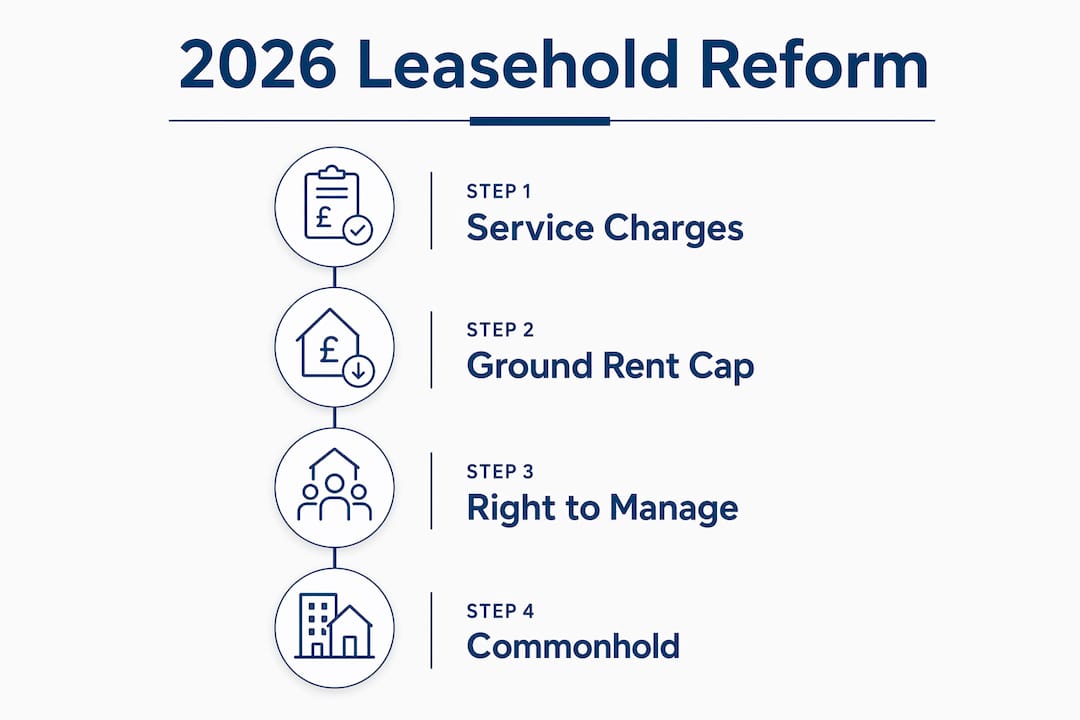
Measures from the Leasehold and Freehold Reform Act 2024 are already being implemented ahead of full abolition. These include regulated building insurance fees and increased transparency on service charge accounts. You now have a stronger legal basis to challenge costs that are not properly evidenced. For a detailed breakdown of what these changes mean for your annual bill, the service charge guide for flat owners explains the new rules clearly.
Ground rent and property value
The £250 ground rent cap removes the financial trap that has made many leasehold properties difficult to mortgage or sell. Lenders have refused mortgages on properties where ground rent exceeds certain thresholds relative to property value. Capping rents and eventually reducing them to a peppercorn removes that risk entirely.
Building management and the Right to Manage
The Right to Manage (RTM) gives leaseholders the legal right to take over building management from a freeholder without buying the freehold. RTM remains a powerful tool right now, before the Bill becomes law. The 2026 reforms sit alongside RTM rather than replacing it. Commonhold conversion will be phased in gradually, and RTM continues to offer a practical route to control your building in the interim.
The financial changes to enfranchisement are equally significant. Prescribed capitalisation and deferment rates will remove marriage value payments, making freehold buyouts more affordable. For leaseholders who want to understand the difference between RTM and buying the freehold, the choice depends on your building's circumstances and your long-term goals.
- Check your current ground rent level and compare it against the £250 cap to assess your immediate saving.
- Review your service charge accounts using the new transparency rights under the Leasehold and Freehold Reform Act 2024.
- Assess whether your block qualifies for RTM now, as a bridge to full commonhold conversion later.
- Get a valuation of your enfranchisement premium under the new rules to see whether buying the freehold has become affordable.
- Monitor the Bill's progress through Parliament, as commencement dates for individual provisions will vary.
Pro Tip: Leaseholders in blocks where the freeholder is unresponsive or charges are opaque should consider RTM now. The RTM process is independent of the Bill's timetable and gives you management control within months, not years.
Why is the leasehold system broken and what does reform fix?
The leasehold system has failed leaseholders for decades. Ground rents have doubled every ten or twenty-five years in some leases, creating a debt that grows faster than property values. Enfranchisement, the process of buying your freehold or extending your lease, has been prohibitively expensive because of marriage value: a premium paid to the freeholder that reflected the increase in property value that the leaseholder themselves created.
The Housing Select Committee has been explicit about the urgency:
"Leaseholders have waited too long for meaningful reform. The 2026 Bill is a significant step, but further acceleration and strengthening of measures are needed to deliver real protection."
Commonhold has existed in English law since 2002 but was almost never used. Developers preferred leasehold because it generated ongoing income from ground rents and service charges. Lenders were unfamiliar with commonhold and often refused to mortgage it. The result was a market where commonhold was theoretically available but practically inaccessible. The 2026 reforms address this directly by mandating commonhold for new builds and simplifying conversion for existing blocks.
The 5 million leaseholders affected by these changes include flat owners across England and Wales who have faced inflated insurance premiums, opaque service charges, and the constant threat of forfeiture over disputed debts. The reform's importance lies not just in the individual financial savings but in the structural shift it creates: from a system designed to extract value from leaseholders to one designed to protect them.
What practical steps can leaseholders take now?
Waiting for the Bill to become law is not the only option. Several rights and protections are already in force, and the reform creates a clear roadmap for action.
| Action | When to act | Relevant right or reform |
|---|---|---|
| Check RTM eligibility | Now | Right to Manage under the Commonhold and Leasehold Reform Act 2002 |
| Challenge service charges | Now | Leasehold and Freehold Reform Act 2024 transparency provisions |
| Assess enfranchisement cost | Now and post-Bill | New valuation rules removing marriage value |
| Plan commonhold conversion | Post-Bill (from 2027) | 50% consent threshold under the 2026 Bill |
| Monitor ground rent cap | Late 2027 at latest | £250 cap with cross-party pressure for earlier implementation |
Cross-party MPs have urged the government to bring the £250 ground rent cap into effect no later than late 2027, sooner than currently planned. Committee chair Florence Eshalomi MP stated that leaseholders have waited too long. That political pressure matters because it signals the cap could arrive earlier than the Bill's default timetable.
For leaseholders considering commonhold conversion, the reduced 50% consent threshold is transformative. Previously, a single dissenting leaseholder could block the entire block from converting. Under the new rules, a majority is sufficient. Organising your neighbours and building consensus now puts you in a strong position the moment the Bill receives Royal Assent.
The long leasehold model has shaped how millions of people own their homes. Understanding how it differs from commonhold is the first step to knowing which route suits your building.
Key takeaways
The 2026 leasehold reform is the most significant change to residential property ownership in England and Wales in decades, and leaseholders who act now will be best placed to benefit.
| Point | Details |
|---|---|
| Commonhold becomes the default | The Bill bans most new leaseholds and makes commonhold the standard ownership model for flats. |
| Ground rents are capped at £250 | Existing leases face a £250 annual cap, falling to peppercorn after 40 years, removing a major financial burden. |
| Forfeiture is abolished | A new enforcement regime replaces the threat of property seizure with proportional judicial remedies. |
| Conversion threshold drops to 50% | Leaseholders no longer need unanimous consent to convert their block to commonhold. |
| RTM remains relevant now | Right to Manage gives leaseholders building control today, independent of the Bill's timetable. |
The reform is real, but the work is not done yet
I have worked with leaseholders long enough to know that legislation and lived experience are two different things. The 2026 Bill is genuinely significant. The removal of marriage value alone will save some leaseholders tens of thousands of pounds on enfranchisement. The forfeiture abolition removes a threat that has hung over flat owners for generations. These are not small adjustments. They are structural corrections to a system that was designed, in many respects, to work against the people living in it.
What I would caution against is assuming the reform will deliver itself. Housing Minister Matthew Pennycook has warned against rapid abolition, and rightly so. The transition to commonhold requires lenders, developers, and managing agents to change their behaviour. That takes time. The success of reform depends on commonhold becoming genuinely attractive to the market, not just legally available. We have been here before with the Commonhold and Leasehold Reform Act 2002, which introduced commonhold and was almost entirely ignored.
The leaseholders who will benefit most from the 2026 changes are those who engage proactively. Use RTM now if your building qualifies. Challenge service charges under the existing transparency rules. Get your enfranchisement premium assessed under the new valuation framework. Do not wait for the law to do the work for you.
— Paul
How Righttomanage supports leaseholders through the 2026 changes
Leasehold reform creates new rights, but exercising them requires knowing where to start.
Righttomanage helps leaseholders in England and Wales take legal control of their building management without buying the freehold. The service covers the full RTM process: eligibility checks, company setup, Section 78 notices, Section 79 claim notices, counter-notice review, and acquisition-date preparation. For leaseholders frustrated with poor managing agents, inflated insurance, or opaque service charges, RTM is available right now, regardless of where the Bill sits in Parliament. The RTM process timeline sets out exactly what to expect at each stage, and the complete RTM resource hub covers eligibility, costs, and every step of the claim.
FAQ
What is the Commonhold and Leasehold Reform Bill?
The Commonhold and Leasehold Reform Bill is the government's planned legislation to replace leasehold with commonhold as the default residential ownership model in England and Wales. It is due to be introduced in autumn 2026 and aims to become law by mid-2027.
When will the £250 ground rent cap take effect?
The cap is planned to take effect by late 2027 at the latest, though cross-party MPs are pressing the government to implement it sooner. Once in force, existing leases will be capped at £250 annually, falling to a peppercorn after 40 years.
Can leaseholders convert to commonhold before the Bill becomes law?
Commonhold conversion under the new 50% consent threshold will only be available once the Bill receives Royal Assent. However, leaseholders can use the existing Right to Manage process now to gain building management control without waiting.
What is the difference between Right to Manage and commonhold?
Right to Manage transfers building management from the freeholder to leaseholders without changing the ownership structure. Commonhold changes the ownership model itself, giving each flat owner outright ownership and shared control of common parts.
How does removing marriage value affect enfranchisement costs?
Marriage value is a premium paid to the freeholder when a lease has fewer than 80 years remaining. Removing it, alongside capping ground rent valuation at 0.1% of freehold value, significantly reduces the cost of buying the freehold or extending a lease.