
Leasehold enfranchisement valuation disputes are disagreements between leaseholders and freeholders over the premium payable when extending a lease or purchasing the freehold. These disputes are among the most contested areas of property law in England and Wales. Key triggers include marriage value, ground rent terms, deferment rates, and lease length. The 2024 Leasehold and Freehold Reform Act has reshaped several valuation rules, yet uncertainty around secondary legislation means disputes remain frequent. Understanding the most common leasehold enfranchisement valuation disputes gives you a real advantage before you serve notice or enter negotiations.
1. What is marriage value and why does it trigger disputes?
Marriage value is the additional worth created when a short lease is extended, reflecting the merged interests of leaseholder and freeholder. Under the Leasehold Reform, Housing and Urban Development Act 1993, marriage value becomes payable when a lease falls below 80 years. At that point, the freeholder is entitled to 50% of the uplift in value. That single threshold generates more disputes than almost any other factor in leasehold enfranchisement.
Leases below 80 years cause premiums to rise sharply, often making flats worth up to 12% less than comparable properties with 99-year leases. That discount reflects the market's recognition of the cost burden ahead. Leaseholders frequently dispute the size of the marriage value component because surveyors on each side apply different assumptions about the property's unencumbered freehold value.

The 2024 Act plans to remove marriage value from premium calculations entirely, pending secondary legislation. The High Court upheld those reforms in 2025. Until the secondary legislation is enacted, however, marriage value remains live and disputes over its calculation continue to reach the First-tier Tribunal (Property Chamber).
Pro Tip: If your lease is approaching 80 years, act before it crosses that threshold. Every month below 80 years increases the marriage value component and raises the premium you will pay.
Key dispute scenarios involving marriage value include:
- Disagreement over the unencumbered freehold value used as the base figure
- Disputes about whether the property qualifies for any marriage value reduction
- Conflicting assumptions about the leaseholder's likely behaviour post-extension
- Arguments over the correct split of the marriage value uplift
2. How do deferment rates and relativity cause valuation disagreements?
The deferment rate is the annual percentage used to discount the freeholder's future reversionary interest back to a present value. A lower deferment rate produces a higher present value for the freeholder's interest, which increases the premium. Surveyors regularly disagree on the correct rate, and even a 0.25% difference can shift the premium by thousands of pounds.
Leasehold relativity is the ratio of a leasehold property's value to its freehold equivalent. Relativity tables exist from multiple sources, including the Gerald Eve and Savills graphs, and each produces different results. Surveyors choose between them based on professional judgement, which introduces genuine subjectivity into every valuation.
Over-reliance on average values instead of weighted, closely comparable evidence weakens valuation reports and invites tribunal "split the difference" rulings. Those rulings satisfy neither party. Valuation is, as practitioners at Tanfield Chambers have noted, a "mysterious art" requiring surveyors to weight closely comparable evidence rather than simply average across a broad dataset.
The practical consequences of this subjectivity are significant:
- Freeholder surveyors tend to select lower deferment rates and relativity tables that favour higher premiums.
- Leaseholder surveyors do the opposite, producing materially lower figures.
- The gap between the two positions can reach tens of thousands of pounds on a single flat.
- Tribunals frequently split the difference between opposing valuations, which underlines the importance of strong, evidence-backed reports.
"Valuation reports that do not critically challenge opposing assumptions risk Tribunal outcomes that split the difference, undermining the claimant's position."
The lesson is clear. A generic report that relies on averages gives the tribunal little reason to prefer your surveyor's figure. A report that interrogates the opposing assumptions and presents weighted comparable evidence gives you a genuine chance of a favourable outcome.
3. In what ways do ground rent and lease length terms create valuation challenges?
Ground rent directly affects the landlord's term value, which is one component of the total premium. Escalating or uncapped ground rents inflate that component significantly, pushing premiums higher and generating disputes about what the correct capitalisation rate should be.
The 2024 Act caps ground rent at 0.1% of the freehold vacant possession value for the purposes of premium calculations. That cap aims to reduce inflated premiums caused by escalating rents. You can read more about how ground rent restrictions affect leasehold valuations and what the reforms mean in practice. Until the cap is fully in force, disputes over ground rent capitalisation remain common.
Lease length creates a separate set of leasehold valuation issues:
- Leases below 70 years become difficult to mortgage, reducing the pool of buyers and suppressing market value
- Leases below 80 years trigger marriage value, as discussed above
- Leases below 60 years are treated by many lenders as unmortgageable, effectively stranding the property
- Each year lost from a short lease compounds the valuation problem because the reversionary interest grows closer
Pro Tip: Never rely on an informal or voluntary lease extension without taking specialist advice. Informal extensions often carry uncapped premiums, escalating ground rents, and less favourable terms than a statutory extension under the 1993 Act.
The table below summarises how lease length affects key valuation and mortgage outcomes:
| Lease length | Marriage value applies | Typical mortgage impact | Valuation risk |
|---|---|---|---|
| 90+ years | No | Standard | Low |
| 80–89 years | No | Minor restrictions | Low to medium |
| 70–79 years | Yes | Increasing restrictions | Medium to high |
| Below 70 years | Yes | Significant restrictions | High |
| Below 60 years | Yes | Often unmortgageable | Very high |
4. What procedural problems contribute to enfranchisement valuation conflicts?
Procedural errors cause a surprising number of enfranchisement claims to fail before any valuation dispute is even reached. Procedural mistakes on notice service and entitlement often dominate enfranchisement disputes more than valuation disagreements themselves.
The most damaging procedural errors include:
- Serving notice on the wrong party. Serving notice on the legally registered proprietor is essential. Errors here cause claim invalidation and costly delays. A "registration gap" between completion and HM Land Registry registration can invalidate a claim if the notice is served on the outgoing rather than the incoming registered owner.
- Missing tribunal deadlines. A statutory minimum two-month negotiation follows the freeholder's counter-notice. Leaseholders must apply to the tribunal within six months if no agreement is reached. Missing that deadline withdraws the claim entirely.
- Errors in conveyancing and registration. Incorrect property descriptions, missing qualifying tenants, or errors in the notice particulars can all be used by freeholders to challenge the validity of a claim.
- Misunderstanding cost liability. Once notice is served, leaseholders pay their own professional fees plus the landlord's reasonable costs. Underestimating those costs creates financial pressure that can force premature settlement.
Procedural diligence is not a secondary concern. A technically perfect valuation report is worthless if the underlying claim is invalidated by a notice served on the wrong party.
5. What are effective dispute resolution strategies for leaseholders?
The most effective approach to enfranchisement dispute resolution combines early expert advice, high-quality evidence, and a clear understanding of the tribunal process. Leaseholders who treat valuation as an afterthought consistently achieve worse outcomes than those who prepare thoroughly before serving notice.
- Commission an independent RICS-registered valuation early. An early valuation sets realistic expectations and identifies potential dispute points before negotiations begin. It also gives your surveyor time to gather weighted comparable evidence rather than relying on averages.
- Instruct a solicitor with specific leasehold enfranchisement experience. General conveyancing solicitors frequently miss procedural requirements that specialist practitioners treat as routine. The cost difference is small compared to the risk of claim invalidation.
- Respond formally to the counter-notice within the statutory period. The two-month negotiation window after a counter-notice is a genuine opportunity to narrow the gap. Use it with a surveyor actively engaged in without-prejudice correspondence.
- Prepare for the First-tier Tribunal if negotiations stall. The First-tier Tribunal determines the premium when parties cannot agree. Tribunal cases are frequently won or lost on the strength of valuation reports that effectively challenge opposing assumptions.
- Use the 2024 Act reforms to your advantage. The pending removal of marriage value and the ground rent cap both reduce the premium in most cases. Understanding which reforms apply to your specific claim strengthens your negotiating position.
- Budget for the full process duration. The typical enfranchisement process runs from 6 to 12 months, but valuation or title complexity can extend it. Build that timeline and the associated costs into your planning from the outset.
You can also explore the full range of leaseholder dispute resolution options if you want a broader view of what is available before committing to a formal claim.
Key takeaways
Leasehold enfranchisement valuation disputes are most effectively resolved through early expert advice, procedurally correct notice service, and evidence-backed surveyor reports that directly challenge opposing assumptions.
| Point | Details |
|---|---|
| Marriage value threshold | Leases below 80 years trigger marriage value, sharply increasing premiums and dispute frequency. |
| Valuation methodology matters | Weighted comparable evidence beats averaging; generic reports invite unfavourable tribunal splits. |
| Procedural errors are fatal | Serving notice on the wrong party or missing tribunal deadlines can invalidate a claim entirely. |
| Ground rent caps reduce premiums | The 2024 Act caps ground rent at 0.1% of freehold value, lowering landlord's term value in calculations. |
| Budget for 6–12 months | Most enfranchisement processes take 6 to 12 months; cost and timeline planning prevents forced settlements. |
The valuation dispute nobody warns you about
The disputes that catch leaseholders off guard are rarely the ones they expect. Most people prepare for a fight over the headline premium figure. What actually derails claims is the procedural detail that nobody mentioned at the outset.
I have seen well-funded, well-intentioned leaseholders lose claims because notice was served during a registration gap at HM Land Registry. The outgoing freeholder had sold. The incoming freeholder was not yet registered. The notice went to the wrong party and the claim was invalidated. No amount of excellent valuation work could rescue it.
The other pattern I see repeatedly is leaseholders accepting the first surveyor they find rather than one with specific tribunal experience. Valuation of leasehold properties is genuinely technical. A surveyor who understands how to weight comparable evidence and construct a report that withstands cross-examination at tribunal is worth considerably more than one who produces a standard desktop appraisal.
The 2024 Act reforms are real and they will reduce premiums for most leaseholders once secondary legislation is enacted. But "pending legislation" is not a negotiating tool today. Freeholders know the reforms are not yet in force. Until they are, you need a strong evidence-based position, not an expectation that the law will do the work for you.
My honest advice: treat the procedural checklist as seriously as the valuation. Get a specialist solicitor, not a generalist. Commission a surveyor who has appeared at tribunal. And never let a deadline pass because you assumed negotiations were progressing well enough.
— Paul
Righttomanage and your enfranchisement options
Leasehold enfranchisement is one route to greater control over your building. Right to Manage is another, and for many leaseholders it is the faster, lower-cost path to removing a poor managing agent without buying the freehold.
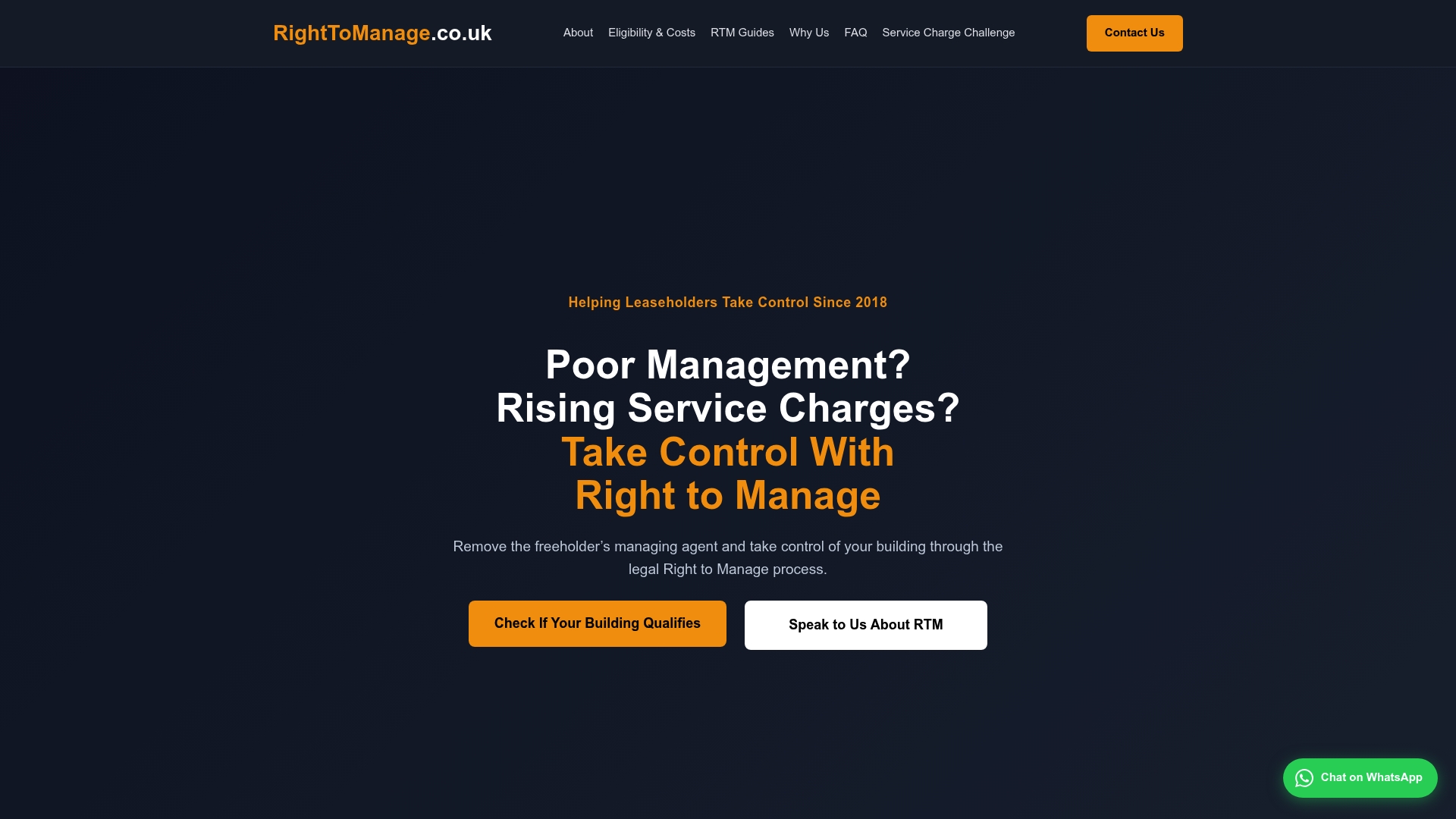
Righttomanage manages the entire RTM process from eligibility checks through to acquisition date, including Section 78 and Section 79 notices, company setup, and counter-notice review. If you are frustrated with excessive service charges, inflated insurance, or a freeholder who ignores maintenance, the RTM process timeline explains exactly how the process works and what to expect at each stage. You can also compare RTM against buying the freehold to decide which route fits your situation.
FAQ
What triggers a leasehold enfranchisement valuation dispute?
Valuation disputes typically arise from disagreements over marriage value, deferment rates, leasehold relativity, and ground rent capitalisation. Each factor involves subjective assumptions that freeholder and leaseholder surveyors regularly interpret differently.
When does marriage value apply in a lease extension?
Marriage value applies when a lease has fewer than 80 years remaining. At that point the freeholder is entitled to 50% of the uplift in value created by the extension, which can significantly increase the premium.
What happens if I miss the tribunal application deadline?
Missing the six-month deadline to apply to the First-tier Tribunal after a counter-notice is served withdraws the claim entirely. You would need to start the process again, losing any costs already incurred.
How long does an enfranchisement dispute typically take to resolve?
The process typically takes 6 to 12 months from notice to completion, though valuation or title complexity can extend this. Disputed cases that proceed to tribunal generally take longer than negotiated settlements.
Does the 2024 Leasehold and Freehold Reform Act change how premiums are calculated?
The 2024 Act plans to remove marriage value from calculations and cap ground rent at 0.1% of freehold vacant possession value. These changes are pending secondary legislation and are not yet fully in force as of 2026.