
Qualifying leaseholders RTM criteria are the statutory conditions set out in the Commonhold and Leasehold Reform Act 2002 that determine whether leaseholders in England and Wales can exercise the Right to Manage (RTM) without buying the freehold or proving fault against their landlord. RTM is the formal legal mechanism that transfers building management from a freeholder or managing agent to a resident-controlled company. To succeed, you must satisfy rules about lease length, building type, participation numbers, and procedural steps. Get any one of these wrong and your claim fails, regardless of how justified your grievances are.
What are the qualifying leaseholders RTM criteria?
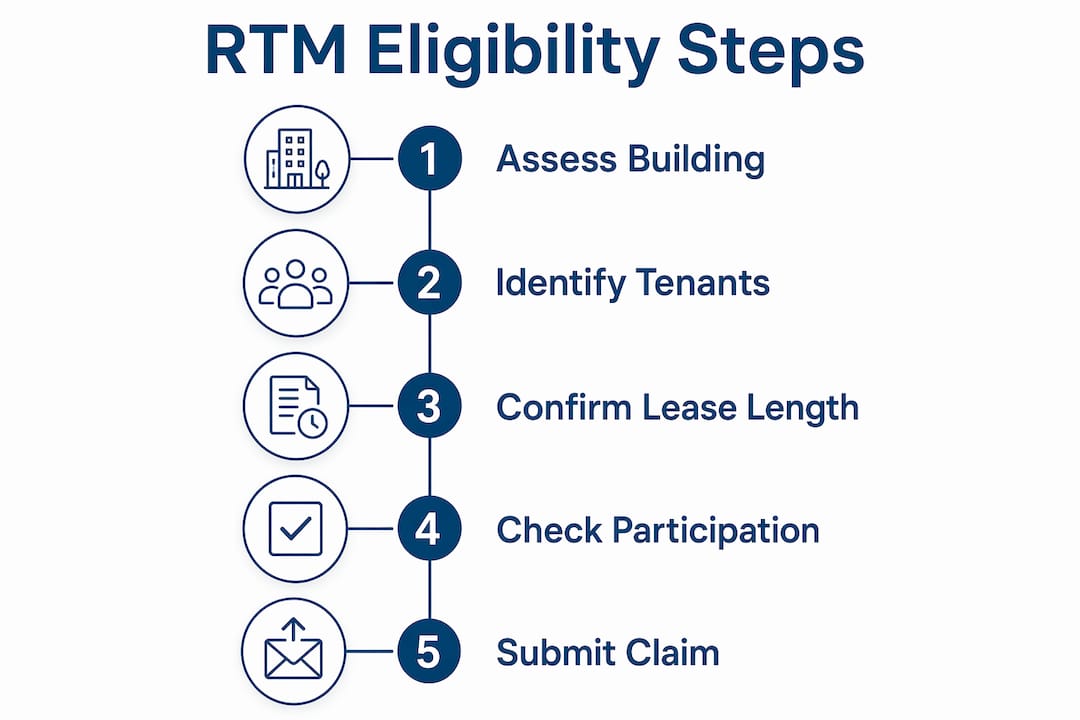
The RTM eligibility framework rests on four pillars: the building must qualify, the tenants must qualify, enough of them must participate, and the RTM company must be properly constituted. Each pillar carries equal weight.
The building must meet structural and use requirements
The building must be self-contained or vertically divisible with independent services. Determining self-containment is not always obvious. A block sharing a roof structure or drainage system with an adjacent building may fail this test. Professional surveyor advice is often necessary before you proceed.
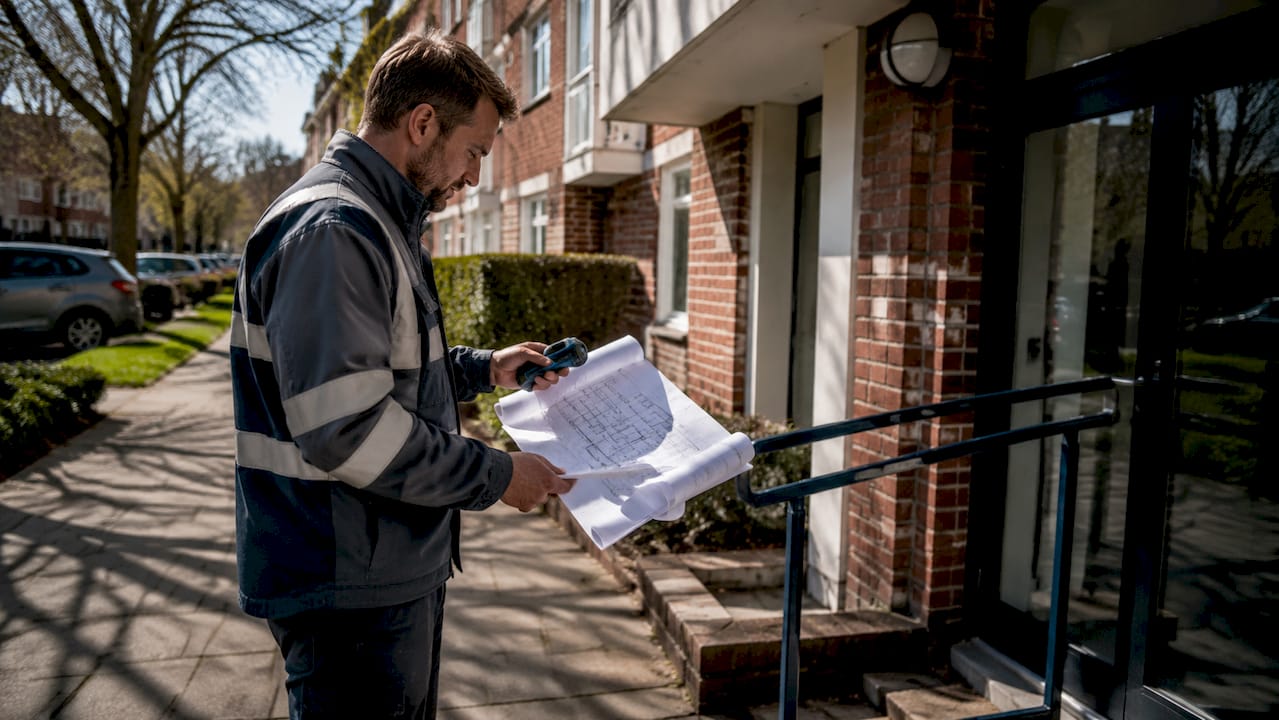
The building must contain at least two flats. Single-flat conversions do not qualify. It must also not be a building where the freeholder or an employee of the freeholder lives in one of the flats as their only or principal home, unless the building contains more than four units.
Mixed-use buildings now have wider access to RTM. The non-residential floor area limit increased from 25% to 50% in march 2025. This means a building where half the floor space is commercial, such as a ground-floor restaurant with flats above, now qualifies. That is a significant change for urban leaseholders in mixed-use blocks.
Who counts as a qualifying tenant?
A qualifying tenant is one who holds a long lease originally granted for more than 21 years, regardless of how many years remain. A lease originally granted for 99 years qualifies even if only 12 years remain on the clock. The original grant length is what matters, not the current unexpired term.
The following table summarises the core leasehold buildings qualifying criteria for RTM at a glance.
| Criterion | Requirement |
|---|---|
| Minimum flats in building | At least two flats |
| Qualifying tenant definition | Original lease granted for more than 21 years |
| Qualifying tenant proportion | At least two-thirds of all flats held by qualifying tenants |
| Non-residential floor area | No more than 50% of total floor area (updated march 2025) |
| RTM company membership | At least 50% of qualifying tenants must be members |
| Building structure | Self-contained or vertically divisible with independent services |
Business tenancies are excluded. If a flat is let on a commercial lease, that tenant does not count as a qualifying tenant for RTM purposes. This matters in buildings where some flats have been let to companies rather than individuals.
How do you identify and verify qualifying leaseholders?
Accurate identification of qualifying tenants is the foundation of a valid RTM claim. Errors here cascade through every subsequent step.
-
Obtain official lease copies from the Land Registry. Proof of original lease term exceeding 21 years is the most common hurdle. Relying on what a neighbour tells you about their lease is not sufficient. Tribunal panels require documentary evidence, and hearsay will not hold up.
-
Check for joint tenancies. Where a flat is held by two or more people jointly, they count as one qualifying tenant together, not as separate qualifying tenants. This affects your participation count.
-
Identify absentee leaseholders. Ghost leaseholders, those who own a flat but are not resident and are difficult to contact, are a persistent problem. You still need to account for them in your total qualifying flat count. You cannot simply exclude them because they are hard to reach.
-
Exclude business tenancies. Review each lease to confirm it is a residential long lease. Any flat held under a business tenancy under the Landlord and Tenant Act 1954 does not qualify.
-
Serve Participation Notices to every qualifying tenant. The Section 78 notice must go to all qualifying tenants at least 14 days before the claim notice is served. There is no judicial discretion to waive this requirement. Missing even one qualifying tenant invalidates the process.
Pro Tip: Order official title register copies from the Land Registry for every flat in the building before you do anything else. This gives you the definitive list of leaseholders and their original lease terms, and it costs a few pounds per title. It is the cheapest insurance you will buy in this process.
Identifying non-qualifying tenancies for RTM is just as important as identifying qualifying ones. A flat held on a short-term assured shorthold tenancy, or one let commercially, reduces your qualifying tenant pool and changes your participation maths.
What membership thresholds must the RTM company meet?
The RTM company is a private company limited by guarantee. Membership must be open to all qualifying tenants, and the claim cannot proceed until membership criteria are met and maintained on the date the claim notice is served.
The key threshold is straightforward in principle: at least 50% of all qualifying tenants must be members of the RTM company when the claim notice is served. In a building with two flats, both leaseholders must participate. There is no majority without unanimity in that scenario.
The calculation is based on total qualifying flats, not on the number of tenants you have managed to contact. This is where many RTM claims stall. The 50% threshold applies to all qualifying flats in the building, including those owned by absentee leaseholders who have not responded to your letters. Miscounting this figure is one of the most common reasons RTM claims fail before they even reach a tribunal.
Membership must also remain stable. If members resign between the invitation stage and the claim notice date, and the total drops below 50%, the claim is invalid. You need to maintain engagement throughout the process, not just at the start.
- At least 50% of qualifying flats must be represented in the RTM company
- In two-flat buildings, both leaseholders must be members
- The threshold is calculated against total qualifying flats, not reachable ones
- Membership must be maintained continuously up to and including the claim notice date
- Any drop below 50% before the claim notice is served invalidates the claim
For leaseholders in small blocks of two to four flats, the participation rules are particularly unforgiving. One disengaged leaseholder can block the entire claim.
What are the most common pitfalls in meeting RTM eligibility?
Most failed RTM claims share the same handful of mistakes. Knowing them in advance saves you months of wasted effort.
Miscounting qualifying tenants. Many leaseholders calculate their 50% threshold against only the tenants they know or can reach. The correct denominator is every qualifying flat in the building. If you have 10 qualifying flats and can only contact 8 leaseholders, you still need 5 members. You cannot reduce the denominator to 8.
Misreading lease term requirements. Some leaseholders assume the remaining term on their lease is what counts. It is not. A lease originally granted for 25 years qualifies even if only 3 years remain. Conversely, a lease originally granted for 20 years does not qualify, regardless of how many years are left.
Failing to account for the 2025 mixed-use changes. Buildings that previously failed the old 25% commercial floor area test may now qualify under the updated 50% threshold. If your building was assessed before march 2025 and found ineligible, it is worth reassessing under the new rules. Mixed-use RTM eligibility is covered in detail at Righttomanage's mixed-use guide.
Procedural errors with participation notices. The 14-day gap requirement between participation notices and the claim notice is a strict statutory rule. Freeholders regularly contest RTM claims on procedural grounds. One day short invalidates the process entirely.
"No discretion is allowed to waive the statutory requirement to invite every qualifying tenant to participate. Failure in this process will invalidate the RTM claim." — Avon Freeholds Ltd v Cresta Court E RTM Co Ltd
Responding to landlord objections. A freeholder can serve a counter-notice disputing that qualifying criteria are met. Understanding the grounds for freeholder objection before you serve your claim notice lets you pre-empt the most common challenges.
Pro Tip: Keep a running spreadsheet from day one listing every flat, the leaseholder's name, their original lease term, their qualifying status, and their RTM company membership status. Update it after every contact. This document becomes your evidence base if the freeholder disputes your claim.
The part most leaseholders underestimate
The RTM process looks procedural on paper. In practice, the hardest part is not the law. It is the people.
I have seen well-organised groups with solid legal advice stumble because two leaseholders on the top floor stopped responding to emails three weeks before the claim notice was due. The 50% threshold is unforgiving. It does not care that you had 60% last month.
The absentee leaseholder problem is real and underappreciated. Many flats in urban blocks are investment properties. The owner lives abroad or simply does not engage with building management. You cannot exclude them from your qualifying flat count, but you also cannot force them to join the RTM company. This means your effective participation target is often higher than 50% of the flats you can actually reach.
My honest observation after working through many RTM cases is this: the leaseholders who succeed are not necessarily the ones with the strongest grievances. They are the ones who treat the process like a project. They document everything, they chase every leaseholder systematically, and they do not serve the claim notice until they are certain the membership count is solid and stable.
The 2025 changes to the commercial floor area threshold are genuinely significant for mixed-use buildings. If you were told your block did not qualify before march 2025, revisit that assessment. The rules changed materially. A building with a café or office on the ground floor that previously failed the 25% test may now sit comfortably within the 50% limit.
One more thing: get the Land Registry documents before you do anything else. Not after you have formed the RTM company. Not after you have started talking to neighbours. Before. The original lease terms are the bedrock of the entire qualification exercise, and you cannot build on guesswork.
— Paul
Check your RTM eligibility with Righttomanage
Righttomanage manages the entire RTM process for leaseholders in England and Wales, from the initial eligibility check through to acquisition date. If you are frustrated with a poor managing agent, excessive service charges, or a freeholder who ignores maintenance requests, RTM gives you the legal route to take control.
Start with a free RTM eligibility check to confirm whether your building and your leaseholder group meet the qualifying criteria. Righttomanage handles Section 78 participation notices, Section 79 claim notices, counter-notice responses, and post-acquisition management setup. The full process timeline is available on the website so you know exactly what to expect at each stage.
Key takeaways
Qualifying leaseholders must meet precise statutory criteria on lease length, building type, and participation numbers, and every condition must hold on the date the claim notice is served.
| Point | Details |
|---|---|
| Original lease term is decisive | A lease originally granted for more than 21 years qualifies, regardless of remaining term. |
| 50% threshold is non-negotiable | At least half of all qualifying flats must be RTM company members on claim notice date. |
| Mixed-use limit raised in 2025 | Buildings with up to 50% commercial floor area now qualify, up from 25% before march 2025. |
| Participation notices are strict | Every qualifying tenant must receive a Section 78 notice at least 14 days before the claim notice. |
| Absentee leaseholders count | Ghost leaseholders are included in the qualifying flat total even if they cannot be contacted. |
FAQ
What is a qualifying tenant for RTM purposes?
A qualifying tenant holds a long lease originally granted for more than 21 years. The number of years remaining on the lease is irrelevant to this test.
How many leaseholders need to join the RTM company?
At least 50% of all qualifying tenants in the building must be members of the RTM company when the claim notice is served. In a two-flat building, both leaseholders must participate.
Can a mixed-use building qualify for RTM?
Yes. Since march 2025, buildings where up to 50% of the total floor area is used for non-residential purposes qualify for RTM. The previous limit was 25%.
What happens if the freeholder disputes the qualifying criteria?
The freeholder can serve a counter-notice challenging whether the building or the tenants meet the statutory requirements. The RTM company can then apply to the First-tier Tribunal (Property Chamber) to have the claim confirmed.
Does a business tenancy count as a qualifying tenancy for RTM?
No. Business tenancies are excluded from the definition of qualifying tenancies for RTM. Only residential long leases originally granted for more than 21 years count towards the qualifying tenant threshold.